Reproductive health apps have long since ceased to be a simple online menstrual cycle calendar. Now theyre much more than that: todays apps monitor changes in the body from first menstruation to menopause, help prepare for pregnancy (or prevent an unwanted one), and much else besides. Formerly mostly electronic show more ...
replacements for paper calendars and notepads, theyve become an important tool for spotting signs of mental and physical health issues in the early stages. To get the most out of a reproductive health app, the user must regularly provide a lot of personal information about their condition that they sure wouldnt want to become public knowledge. And so the question arises: to what degree can you trust the developers of such applications and devices? Unfortunately, the answer isnt exactly reassuring. Tarnished reputation Blind faith in reproductive health apps is not recommended, because developers have repeatedly betrayed the trust of users. In 2020 we wrote about two quite popular apps — Maya and MIA — that shared users personal information with Facebook. Generally, apps can share their data with third parties for marketing, research, or other purposes after getting the users consent. Usually users give this consent by accepting the privacy policy. The problem is that Maya and MIA linked up to analytics platforms when first launched, and these forwarded private data to the aforementioned social network. In other words, it happened before the user was even given the chance to read the privacy policy and agree (or not) to the transfer of their data. Maya and MIA are not the only apps accused of neglecting user privacy. In September 2020 journalists at The Wall Street Journal analyzed the data-sharing activity of a number of apps. It revealed that Flo, another major reproductive health application, shared information directly related to users health (for example, date of menstruation onset or start of pregnancy planning) — again with Facebook. But why does a major corporation need all this information, and should it bother you anyway? First of all, some data (pregnancy-related, for example), can be useful for more accurate targeted advertising. Advertising targeting pregnant people costs ten times more, as theyre likely planning on spending a lot on new stuff theyll need for the new addition to the family. Second, even for those who dont see targeted advertising as a bad thing, the disclosure of such intimate information can impact the cost of health insurance, potential employment, and more. The issue of data-sharing by reproductive health apps escalated this year with the U.S. Supreme Courts overturning of the Roe v. Wade ruling, which guaranteed people in the U.S. the right to an abortion. As a consequence of this decision, several states immediately criminalized abortion. It also sparked a debate about data protection in period tracking apps. The fear is that companies could be asked to hand over users health data to law enforcement agencies. If such a request were granted, the information could be used as evidence in court. Okay, so what do I do? All this has inevitably prompted a wave of studies on reproductive health-app security. For example, the Mozilla Foundation analyzed the security and privacy of 25 popular apps and devices with the relevant features. So surely thats the solution right there: simply consult such a list, choose the most secure option, and thats it. Unfortunately, the privacy policy and security features of a single reproductive health app may differ from country to country — that is, theres no definitive data on all the apps because it depends on the region you live in. For this reason, weve tried to compile some general tips to help you choose the safest app. Read the privacy policy Before downloading an app and feeding it very private information about yourself, its vital that you read the privacy policy. This can be found in the app description in the App Store and on Google Play — usually somewhere at the bottom of the page. Admittedly, this is no fun: its likely to contain legalese. But when it comes to your reproductive health, we strongly advise that you take the time to go through it. And in doing so, pay attention to the following details: How and where the app stores the information it collects. There are two possibilities: directly on your device, or somewhere on the developers servers. The former is definitely preferable. If the app of your choice does store data on a server, its important to look at what information about you it intends to (and probably will) use for marketing and research purposes. Make sure this data is not directly health-related. Its also good if the app gives assurances to share your data with analytics platforms only in anonymized form. Sure, data anonymization is another gray area, and experts often note that new techniques make it possible to re-identify users. All the same, it does offer some kind of privacy protection. Its not uncommon for app privacy policies to refer to specific laws. If so, look up some information about them. For example, its a good sign if the apps policy says it complies with the EUs General Data Protection Regulation (GDPR). Check apps reputations You may find the current privacy policy satisfactory, but its useful all the same to investigate the apps background. Maybe it used to share users health data (like Flo did) or suffered a major leak. Of course past mistakes dont mean the app can never be trusted again. But if there are any foul-ups, its important to find out how the developers responded, and whether they took appropriate measures to prevent a recurrence. Ensure login security An app needs to password or biometric authentication. After all, if your phone fell into the wrong hands, a stranger would have access to your very personal data. Moreover, having a password can help out in case of reproductive abuse. And its a bonus if the app checks the strength of your password. For example, the Mozilla Foundation, in its assessment of reproductive health apps and devices, looked to see if they allowed weak passwords, such as 0000. Indeed, in a program youll entrust with a lot of private data, its better to set a strong password. Decide what you dont want to share Think about what kind of data period-tracking apps generally need. Besides a simple calendar for recording your menstrual cycle, they usually offer to monitor associated symptoms, and assist with pregnancy planning (or, conversely, contraception). Its important to understand what data the app really requires for your specific needs. For example, if an app with which youre trying to plan a pregnancy is interested in your preferences in manicure, most likely it shouldnt be trusted. Be careful with external links The authors of almost every application integrate links to resources of external partners. As regards, reproductive health apps, these can be, among others, online stores or medical institutions. Remember that the programs privacy policy doesnt apply to them. So, when following external links — even from a trusted app — be on your guard. So, what to choose? Selecting the right reproductive health application is no easy task and requires a fair bit of research. If you lack the time or inclination, you could do far worse than heeding the advice of those whove already investigated the topic. For example, among the apps studied by the Mozilla Foundation, the standout is Euki, created by the international non-profit Women Help Women. It meets all the criteria weve touched upon, and has other interesting privacy features to boot.
Zero trust is useful in some situations, but organizations should not be trying to fit zero trust everywhere. In some cases, identity-based networking is an appropriate alternative.
It's time for on-the-record answers to questions about data destruction in cloud environments. Without access, how do you verify data has been destroyed? Do processes meet DoD standards, or do we need to adjust standards to meet reality?
Money-lending apps built using the Flutter software development kit hide a predatory spyware threat and highlight a growing trend of using personal data for blackmail.
All critical information infrastructures (CIIs) in Singapore must continuously transform to keep up with the changing threat landscape and this means going beyond "generic" cybersecurity practices.
The US Cybersecurity and Infrastructure Security Agency (CISA) has added two flaws affecting Veeam’s Backup & Replication product to its Known Exploited Vulnerabilities Catalog.
Australia signed a bilateral security agreement with Vanuatu on Tuesday which will include cooperation over cybersecurity matters, the Department of Foreign Affairs and Trade (DFAT) announced.
The cyber-espionage group Cloud Atlas has ramped up activities targeting Russia, Belarus and disputed parts of Ukraine and Moldova since Russia’s invasion this year, according to a new Check Point report.
Effective from January 10 next year, the new law requires anyone offering "deep synthesis" technology and services, including deepfakes and virtual reality, to label these images accordingly.
Ant Security researcher Yuhao Jiang demonstrated a working exploit for the CVE-2022-31705 vulnerability during Geekpwn, a hacking contest run by the Tencent Keen Security Lab.
Momentum is building around a recently created Biden administration task force meant to unite the federal government for a common purpose: stem the tide of ransomware attacks that has flooded the country.
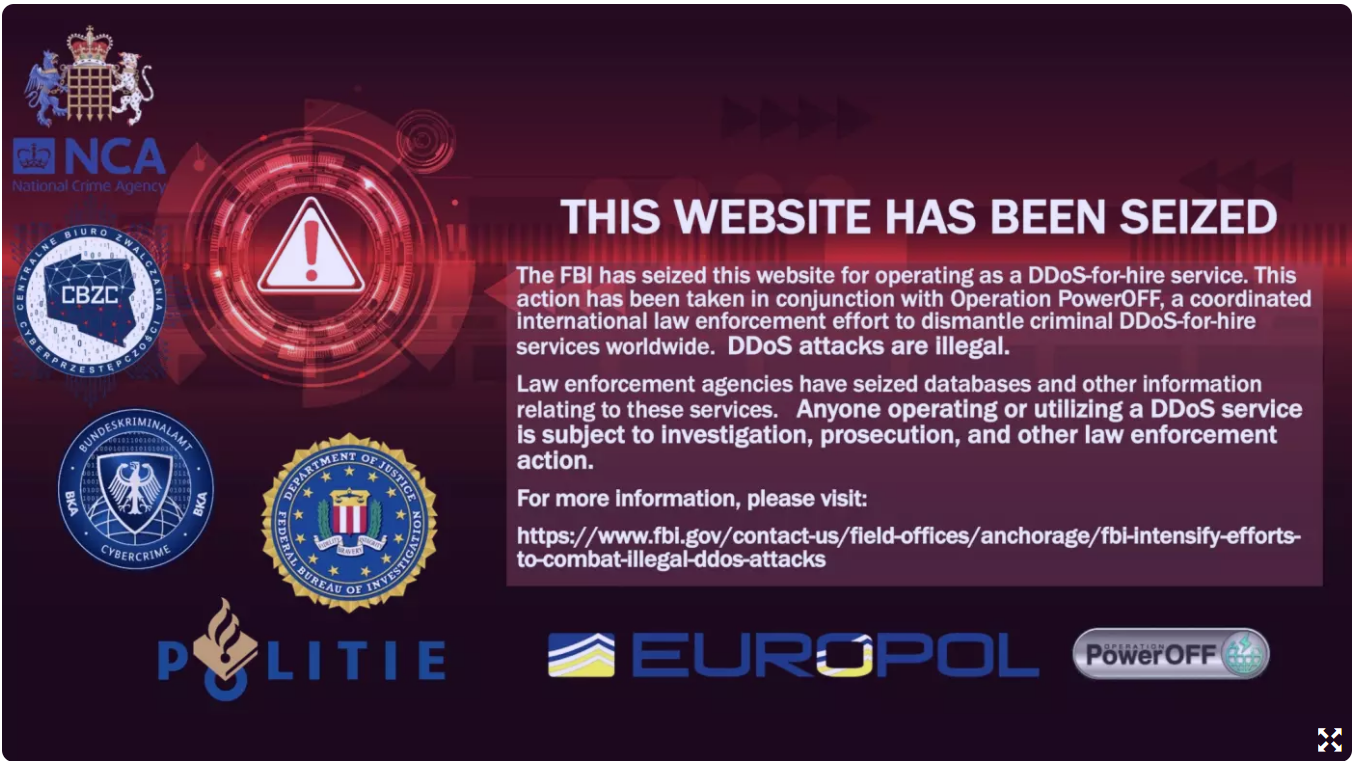
The US authorities have charged six people in connection with running DDoS-for-hire services which enabled attacks on millions of targets, according to the Department of Justice (DoJ).
The new distribution method was spotted by Cisco Talos, which said it identified fraudulent email messages featuring HTML attachments with encoded SVG images that incorporate HTML script tags.
After looking at 28 of the most popular manufacturers, the Cybernews research team found 3.5 million IP cameras exposed to the internet, signifying an eightfold increase since April 2021.
InfraGard is an information-sharing network designed to allow high-level professionals both in and out of the government to collaborate on issues of cybersecurity and defense.
The EU has issued a draft decision agreeing that measures taken by the United States ensure sufficient protection for personal data to be transferred from the region to US companies.
The Commission Nationale de l'informatique et des Libertés (CNIL) launched an investigation into Apple after a complaint filed by France Digitale, a lobby group supporting startups, accused the company of violating EU privacy laws last year.
Google this week announced a Chrome update that resolves eight vulnerabilities in the popular browser, including five use-after-free flaws reported by external researchers.
A cyber warfare group backed by a “neighbouring” nation’s government was involved in the cyberattack on servers of the All India Institute of Medical Sciences (AIIMS), two sources aware of a government probe into the breach said.
Siemens released 20 new advisories addressing roughly 140 security holes, including more than 80 OpenSSL and OpenSSH vulnerabilities affecting its Scalance X-200RNA switches.
There's no end – or restored data – in sight for some Rackspace customers now on the 12th day of the company's ransomware attack-induced hosted Exchange email service outage.
NuGet had the largest share of malicious package uploads, counting 136,258, PyPI had 7,894 infections, and NPM only had 212. The phishing packages were uploaded in troves within a couple of days, which is commonly a sign of malicious activity.
Software teams can now fix bugs faster with faster release cycles, but breach pressure is increasing. Using SBOM and automation will help better detect, prevent, and remediate security issues throughout the software development life cycle.
This report builds upon "Potential Threat Vectors to 5G Infrastructure," a paper published last year by the Enduring Security Framework (ESF) cross-sector working group focused on addressing risks and threats to U.S. national security systems.
Microsoft says it has suspended several third-party developer accounts that submitted malicious Windows drivers for the IT giant to digitally sign so that the code could be used in cyberattacks.
ESET researchers discovered a spearphishing campaign targeting Japanese political entities a few weeks before the House of Councillors elections, and in the process uncovered a previously undescribed MirrorFace credential stealer
FortiGuard Labs identified an ongoing, previously unseen CMS scanner and brute forcer, dubbed GoTrim, installed in infected WordPress sites on Linux systems. The botnet detects and evades anti-bot techniques used by web hosting providers and CDNs, such as Cloudflare and SiteGround. WordPress site owners are recommended to use stronger administrator account passwords and upgrade the base CMS software.
Multiple high-impact vulnerabilities affecting Thunderbird, Firefox ESR, and Firefox were fixed by updates from Mozilla. The bugs might have given arbitrary code execution if they were successfully exploited.
An emerging cybercriminal group linked with Conti has expanded its partial encryption strategy and demonstrates other evasive maneuvers, as it takes aim at healthcare and other sectors.
The HHS warned the healthcare and public health sector organizations against the rising number of LockBit 3.0 ransomware attacks, along with other ransomware and triple-extortion. The frequent attack vectors associated with ransomware are phishing, Remote Desktop Protocol (RDP), credentials, and known vulnerabilities.
New phishing techniques by APT42, or Charming Kitten, have come to light that includes compromised accounts, malware, and confrontational lures. The researchers observed at least 60 campaigns this year, which relied on benign conversations to initiate contact with targets.
Microsoft revoked several hardware developer accounts after drivers signed through those profiles were leveraged by hackers in attacks, including ransomware incidents. Sophos revealed that Cuba ransomware operators used the BURNTCIGAR loader utility to install a malicious driver signed using Microsoft's certificate.
SOUND4 IMPACT/FIRST/PULSE/Eco versions 2.x and below allow an unauthenticated attacker to send network signals to an arbitrary target host that can be abused in an ICMP flooding attack. This includes the utilization of the ping, traceroute and nslookup commands through ping.php, traceroute.php and dns.php respectively.
SOUND4 IMPACT/FIRST/PULSE/Eco versions 2.x and below allows an unauthenticated attacker to disconnect the current monitoring user from listening/monitoring and takeover the radio stream on a specific channel.
SOUND4 Server Service version 4.1.102 suffers from an unquoted search path issue impacting the service SOUND4 Server for Windows. This could potentially allow an authorized but non-privileged local user to execute arbitrary code with elevated privileges on the system. A successful attempt would require the local user show more ...
to be able to insert their code in the system root path undetected by the OS or other security applications where it could potentially be executed during application startup or reboot. If successful, the local user's code would execute with the elevated privileges of the application.
BSidesSF is soliciting presentations, workshops, and villages for the 2023 annual BSidesSF conference. It will be located at City View at the Metreon in downtown San Francisco April 22nd through the 23rd, 2023.
Acronis TrueImage versions 2019 update 1 through 2021 update 1 are vulnerable to privilege escalation. The com.acronis.trueimagehelper helper tool does not perform any validation on connecting clients, which gives arbitrary clients the ability to execute functions provided by the helper tool with root privileges.
New research also analyzes the commoditization of adversary-in-the-middle attacks, JavaScript obfuscation in exploit kits, and a malware family with Gothic Panda ties.
Phishing campaigns involving the Qakbot malware are using Scalable Vector Graphics (SVG) images embedded in HTML email attachments. The new distribution method was spotted by Cisco Talos, which said it identified fraudulent email messages featuring HTML attachments with encoded SVG images that incorporate HTML script tags. HTML smuggling is a technique that relies on using legitimate features of
A previously undocumented Android malware campaign has been observed leveraging money-lending apps to blackmail victims into paying up with personal information stolen from their devices. Mobile security company Zimperium dubbed the activity MoneyMonger, pointing out the use of the cross-platform Flutter framework to develop the apps. MoneyMonger "takes advantage of Flutter's framework to
Web applications, often in the form of Software as a Service (SaaS), are now the cornerstone for businesses all over the world. SaaS solutions have revolutionized the way they operate and deliver services, and are essential tools in nearly every industry, from finance and banking to healthcare and education. Most startup CTOs have an excellent understanding of how to build highly functional
NuGet, PyPi, and npm ecosystems are the target of a new campaign that has resulted in over 144,000 packages being published by unknown threat actors. "The packages were part of a new attack vector, with attackers spamming the open-source ecosystem with packages containing links to phishing campaigns," researchers from Checkmarx and Illustria said in a report published Wednesday. Of the 144,294
The U.S. Department of Justice (DoJ) on Wednesday announced the seizure of 48 domains that offered services to conduct distributed denial-of-service (DDoS) attacks on behalf of other threat actors, effectively lowering the barrier to entry for malicious activity. It also charged six suspects – Jeremiah Sam Evans Miller (23), Angel Manuel Colon Jr. (37), Shamar Shattock (19), Cory Anthony Palmer
A Chinese-speaking advanced persistent threat (APT) actor codenamed MirrorFace has been attributed to a spear-phishing campaign targeting Japanese political establishments. The activity, dubbed Operation LiberalFace by ESET, specifically focused on members of an unnamed political party in the nation with the goal of delivering an implant called LODEINFO and a hitherto unseen credential stealer
Microsoft has revised the severity of a security vulnerability it originally patched in September 2022, upgrading it to "Critical" after it emerged that it could be exploited to achieve remote code execution. Tracked as CVE-2022-37958 (CVSS score: 8.1), the flaw was previously described as an information disclosure vulnerability in SPNEGO Extended Negotiation (NEGOEX) Security Mechanism. SPNEGO,
Law enforcement agencies in the United States, UK, Netherlands, Poland, and Germany have brought down the most popular DDoS-for-hire services on the internet, responsible for tens of millions of attacks against websites. Read more in my article on the Tripwire State of Security blog.
Drug dealers come unstuck while using the Encrochat encrypted-messaging app, and we put the Lensa AI’s avatar-generation tool under the microscope. All this and more is discussed in the latest edition of the “Smashing Security” podcast by computer security veterans Graham Cluley and Carole Theriault. Plus – don’t miss our featured interview with Rico Acosta, IT manager at Bitwarden.
Microsoft has warned that malicious hackers were able to get the software giant to digitally sign their code so it could be used in attacks, such as the deployment of ransomware. Read more in my article on the Hot for Security blog.