Not so long ago, our technologies detected a new APT attack on iPhones. The attack was part of a campaign aimed at, among others, Kaspersky employees. Unknown attackers used an iOS kernel vulnerability to deploy a spyware implant dubbed TriangleDB in the devices memory. Our experts have been able to study this implant show more ...
thoroughly. What can the TriangleDB implant do? Studying this implant was no easy task, since it works only in the phones memory — leaving no traces in the system. That is, the reboot completely wipes all traces of the attack, and the malware had a self-destruct timer that activated automatically 30 days after the initial infection (if the operators decided not to send a command to extend its working time). The basic functionality of the implant includes the following features: file manipulation (creation, modification, deletion and exfiltration); manipulations with running processes (getting a list and terminating them); exfiltration of iOS keychain elements — which may contain certificates, digital identities, and/or credentials for various services; transmission of geolocation data — including coordinates, altitude, and speed and direction of movement. Also, the implant can load additional modules into the phones memory and run them. If youre interested in the technical details of the implant, you can find them in a post on the Securelist blog (aimed at cybersecurity experts). APT attacks on mobile devices Recently, the main target of APT attacks in general has mostly been traditional personal computers. However, modern mobile devices are these days comparable to office PCs in terms of both performance and functionality. Theyre used to interact with business-critical information, store both personal and business secrets, and can serve as access keys to work-related services. Therefore, APT groups are putting all the more effort into designing attacks on mobile operating systems. Of course, Triangulation is not the first attack aimed at iOS devices. Everyone remembers the infamous (and, unfortunately, still ongoing) case of the commercial spyware Pegasus. There were other examples too, like Insomnia, Predator, Reign, etc. Also, its no wonder that APT-groups are interested in the Android OS as well. Not so long-ago news outlets wrote about an attack by the Transparent Tribe APT group, which used the CapraRAT backdoor against Indian and Pakistani users of this system. And in the third quarter of last year, we discovered previously unknown spyware targeting Farsi-speaking users. All this suggests that in order to protect a company from APT attacks these days, its necessary to ensure the security of not only stationary equipment — servers and workstations — but also of mobile devices used in the work process. How to improve your chances against APT attacks on mobiles It would be wrong to assume that the default protection technologies provided by device manufacturers are enough to protect mobile devices. The Operation Triangulation case clearly shows that even Apple technologies arent perfect. Therefore, we recommend that businesses should always employ a multi-level protection system, which includes convenient tools allowing for mobile device control, plus systems that can monitor their network interactions. In order to avoid falling victim to a targeted attack by a known or unknown threat actor, Kaspersky researchers recommend implementing the following measures: Provide your SOC team with access to the latest threat intelligence (TI). Kaspersky Threat Intelligence is a single point of access for the companys TI, providing it with cyberattack data and insights gathered by Kaspersky spanning over 20 years. Upskill your cybersecurity team to tackle the latest targeted threats with Kaspersky online training developed by our experts. To help free-up your SOC from routine alert triage tasks, use proven managed detection and response service, such as Kaspersky Managed Detection and Response. The service combines AI-based detection technologies with extensive expertise in threat hunting and incident response from professional units including Kaspersky Global Research & Analysis Team (GReAT).
If you operate a cybercrime business that relies on disseminating malicious software, you probably also spend a good deal of time trying to disguise or “crypt” your malware so that it appears benign to antivirus and security products. In fact, the process of “crypting” malware is sufficiently show more ...
complex and time-consuming that most serious cybercrooks will outsource this critical function to a handful of trusted third parties. This story explores the history and identity behind Cryptor[.]biz, a long-running crypting service that is trusted by some of the biggest names in cybercrime. Virtually all malware that is deployed for use in data stealing at some point needs to be crypted. This highly technical, laborious process involves iteratively altering the appearance and behavior of a malicious file until it no longer sets off alarm bells when scanned by different antivirus tools. Experienced malware purveyors understand that if they’re not continuously crypting their malware before sending it out, then a lot more of whatever digital disease they are trying to spread is going to get flagged by security tools. In short, if you are running a cybercrime enterprise and you’re not equipped to handle this crypting process yourself, you probably need to pay someone else to do it for you. Thanks to the high demand for reliable crypting services, there are countless cybercriminals who’ve hung out their shingles as crypting service providers. However, most of these people do not appear to be very good at what they do, because most are soon out of business. One standout is Cryptor[.]biz. This service is actually recommended by the purveyors of the RedLine information stealer malware, which is a popular and powerful malware kit that specializes in stealing victim data and is often used to lay the groundwork for ransomware attacks. Cryptor[.]biz also has been recommended to customers of the Predator information stealer malware family (via the malware’s Telegram support channels). WHO RUNS CRYPTOR[.]BIZ? As good as Cryptor[.]biz may be at obfuscating malware, its proprietor does not appear to have done a great job covering his own tracks. The registration records for the website Cryptor[.]biz are hidden behind privacy protection services, but the site’s homepage says potential customers should register by visiting the domain crypt[.]guru, or by sending a Jabber instant message to the address “masscrypt@exploit.im.” Crypt[.]guru’s registration records also are hidden, yet passive domain name system (DNS) records for both cryptor[.]biz and crypt[.]guru show that in 2018 the domains were forwarding incoming email to the address obelisk57@gmail.com. Cyber intelligence firm Intel 471 reports that obelisk57@gmail.com was used to register an account on the forum Blacksoftware under the nickname “Kerens.” Meanwhile, the Jabber address masscrypt@exploit.im has been associated with the user Kerens on the Russian hacking forum Exploit from 2011 to the present day. The login page for Cryptor dot biz contains several clues about who runs the service. The very first post by Kerens on Exploit in 2011 was a negative review of a popular crypting service that predated Cryptor[.]biz called VIP Crypt, which Kerens accused of being “shitty” and unreliable. But Intel 471 finds that after his critical review of VIP Crypt, Kerens did not post publicly on Exploit again for another four years until October 2016, when they suddenly began advertising Cryptor[.]biz. Intel 471 found that Kerens used the email address pepyak@gmail.com, which also was used to register Kerens accounts on the Russian language hacking forums Verified and Damagelab. Ironically, Verified has itself been hacked multiple times over the years, with its private messages and user registration details leaked online. Those records indicate the user Kerens registered on Verified in March 2009 from an Internet address in Novosibirsk, a city in the southern Siberian region of Russia. In 2010, someone with the username Pepyak on the Russian language affiliate forum GoFuckBiz[.]com shared that they typically split their time during the year between living in Siberia (during the milder months) and Thailand (when Novosibirsk is typically -15 °C/°5F). For example, in one conversation about the best car to buy for navigating shoddy roads, Pepyak declared, “We have shitty roads in Siberia.” In January 2010, Pepyak asked the GoFuckBiz community where one might find a good USB-based modem in Phuket, Thailand. DomainTools.com says the email address pepyak@gmail.com was used to register 28 domain names over the years, including a now-defunct Russian automobile sales website called “autodoska[.]biz.” DomainTools shows this website was registered in 2008 to a Yuri Churnov from Sevastpol, Crimea (prior to Russia’s annexation of Crimea in 2014, the peninsula was part of Ukraine). The WHOIS records for autodoska[.]biz were changed in 2010 to Sergey Purtov (pepyak@gmail.com) from Yurga, a town in Russia’s Kemerovo Oblast, which is a relatively populous area in Western Siberia that is adjacent to Novosibirsk. A satellite view of the region including Novosibirsk, Yurga and Kemerovo Oblast. Image: Google Maps. Many of the 28 domains registered to pepyak@gmail.com have another email address in their registration records: unforgiven57@mail.ru. According to DomainTools, the Unforgiven email address was used to register roughly a dozen domains, including three that were originally registered to Keren’s email address — pepyak@gmail.com (e.g., antivirusxp09[.]com). One of the domains registered in 2006 to the address unforgiven57@mail.ru was thelib[.]ru, which for many years was a place to download pirated e-books. DomainTools says thelib[.]ru was originally registered to a Sergey U Purtov. Most of the two-dozen domains registered to pepyak@gmail.com shared a server at one point with a small number of other domains, including mobile-soft[.]su, which was registered to the email address spurtov@gmail.com. CDEK, an express delivery company based in Novosibirsk, was apparently hacked at some point because cyber intelligence firm Constella Intelligence found that its database shows the email address spurtov@gmail.com was assigned to a Sergey Yurievich Purtov (Сергей Юрьевич Пуртов). DomainTools says the same phone number in the registration records for autodoska[.]biz (+7.9235059268) was used to secure two other domains — bile[.]ru and thelibrary[.]ru, both of which were registered to a Sergey Y Purtov. A search on the phone number 79235059268 in Skype reveals these digits belong to a “Sergey” from Novosibirsk with the now-familiar username — Pepyak. Bringing things full circle, Constella Intelligence shows that various online accounts tied to the email address unforgiven57@mail.ru frequently relied on the somewhat unique password, “plk139t51z.” Constella says that same password was used for just a handful of other email addresses, including gumboldt@gmail.com. Hacked customer records from CDEK show gumboldt@gmail.com was tied to a customer named Sergey Yurievich Purtov. DomainTools found that virtually all of the 15 domain names registered to gumboldt@gmail.com (including the aforementioned mobile-soft[.]su) were at one point registered to spurtov@gmail.com. Intel 471 reports that gumboldt@gmail.com was used in 2009 to register a user by the nickname “Kolumb” on the Russian hacking forum Antichat. From Kolumb’s posts on Antichat, it seems this user was mostly interested in buying access to compromised computers inside of Russia. Then in December 2009, Kolumb said they were in desperate need of a reliable crypting service or full-time cryptor. “We need a person who will crypt software every day, sometimes even a couple of times a day,” Kolumb wrote on Antichat. Mr. Purtov did not respond to requests for comment sent to any of the email addresses referenced in this report. Mail.ru responded that the email address spurtov@mail.ru is no longer active. ANALYSIS As KrebsOnSecurity opined on Mastodon earlier this week, it makes a lot of sense for cybersecurity researchers and law enforcement alike to focus attention on the top players in the crypting space — for several reasons. Most critically, the cybercriminals offering time-tested crypting services also tend to be among the most experienced and connected malicious coders on the planet. Think of it this way: By definition, a crypting service scans and examines all types of malware before those new nasties are first set loose in the wild. This fact alone should make these criminal enterprises a primary target of cybersecurity firms looking to gain more timely intelligence about new malware. Also, a review of countless posts and private messages from Pepyak and other crypting providers shows that a successful crypting service will have direct and frequent contact with some of the world’s most advanced malware authors. In short, infiltrating or disrupting a trusted crypting service can be an excellent way to slow down or even sideline a large number of cybercrime operations all at once. Further reading on the crypting industry: This Service Helps Malware Authors Fix Flaws in Their Code Antivirus is Dead: Long Live Antivirus!
Gen Digital, the parent company of the security companies, is the latest victim in a rash of Cl0p attacks on the bug in the MOVEit transfer software, leading to employee data being revealed.
The emerging cyber-threat group is unusually persistent and nimble, bypassing MFA, stealing data, and using compromised environments for downstream customer attacks.
Organizations need to start taking critical infrastructure threats seriously, as they could be a precursor to future, hybrid cyber-kinetic warfare attacks, experts warn.
The US Department of Justice adds litigators under its National Security Division to take on sophisticated cyber threats from adversarial nation-states.
The notorious APT15 used common malware tools and a third-generation custom "Graphican" backdoor to continue its information gathering exploits, this time against foreign ministries.
A slew of critical advisories this week showcase an exploding edge device attack surface for SMBs, which have limited cybersecurity protection, visibility, and maintenance available.
As a former Gartner analyst, it was interesting to be on the other side, listening as others explored the impact of CEO and CIO priorities on security.
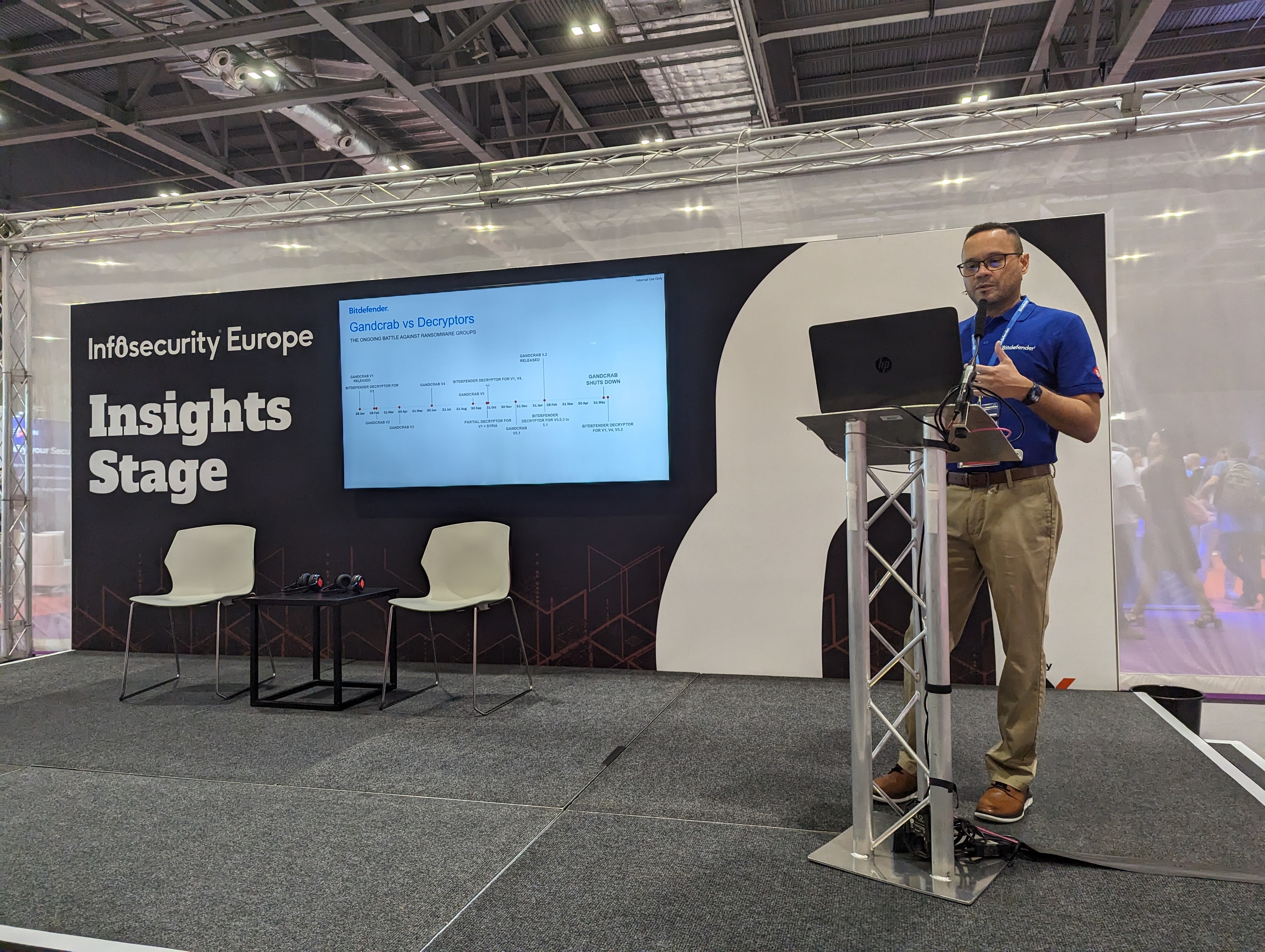
INFOSEC23 — London — It's time to update what we think we understand about ransomware, including new defensive measures and how fast the attack response should be.
The mapping of CIS Controls to Verizon’s incident classifications presents organizations with an opportunity to optimize their security resources by aligning them with real-world security incidents.
The flaw, tracked as CVE-2023-20887, could allow a malicious actor with network access to the product to perform a command injection attack, resulting in remote code execution.
Researchers stumbled across a collection of malicious artifacts, dubbed JokerSpy, which they believe to be components of an advanced toolkit specifically designed to target Apple macOS systems. Based on the above and that multiple files were missing from the victim system, the researchers suspect that the malicious artifacts are part of a more intricate attack.
Gen Digital, the company behind known cybersecurity brands such as Avast, Avira, AVG, Norton, and LifeLock, has confirmed that employee’s personal information was compromised in the recent MOVEit ransomware attack.
Cyware, a leading provider of threat intelligence management and cyber fusion solutions, announced today a strategic technology partnership with Mimecast, an advanced email and collaboration security company.
Pro-Russian hacker group Anonymous Sudan appears to use expensive online infrastructure to perpetuate distributed denial-of-service attacks, undermining its claim to be a volunteer group operating from an impoverished East African country.
The threat actors claim to have stolen 7 TB of data from the University of Manchester during a June 6th cyberattack in an email sent to students and shared with BleepingComputer.
To ensure the legal and safe use of data, businesses should provide employee training, anonymize PII before processing, and regularly review and update data protection policies.
A group of government-backed hackers used an almost six-year-old Telerik vulnerability to break into a US federal agency's Microsoft IIS web server, underscoring the importance of patching.
The study by KnowBe4, which analyzed a dataset of over 12.5 million users across 35,681 organizations, revealed that 35.2% of users who had received no security training were prone to clicking on suspicious links or engaging in fraudulent actions.
Graphican is notable for using Microsoft Graph API and OneDrive to stealthily obtain its C2 infrastructure addresses in encrypted form, giving it versatility and resistance against take-downs.
IT teams have made security efforts and progress in zero-trust implementation strategies to establish a new sense of normalcy following the network upheaval caused by the start of the global pandemic.
A threat group tracked as APT28 and linked to Russia's General Staff Main Intelligence Directorate (GRU) has breached Roundcube email servers belonging to multiple Ukrainian organizations, including government entities.
An unidentified cybercrime group was observed brute-forcing vulnerable Linux SSH servers to drop various malware strains, including the Tsunami DDoS bot. Tsunami, also known as Kaiten, is used by a multitude of threat actors as the source code of the botnet is publicly available. administrators are recommended to use passwords that are difficult to guess and change them periodically to prevent falling victim.
Condi, unlike some botnets which propagate by means of brute-force attacks, leverages a scanner module that checks for vulnerable TP-Link Archer AX21 devices and, if so, executes a shell script retrieved from a remote server to deposit the malware.
The first security defect, tracked as CVE-2023-2986 (CVSS score 9.8/10), impacts the Abandoned Cart Lite for WooCommerce, a plugin that notifies customers who did not complete the purchase process, and which has more than 30,000 active installations.
LockBit was the most active group last month, but NCC Group researchers were surprised by 8base, which started listing victims from attacks that occurred beginning in April 2022.
The growing adoption of cloud has elevated cloud security fear for IT teams, as they grapple with the challenges and concerns arising from the widespread use of complex cloud environments while diligently addressing them, according to SUSE.
The decision to put cyber on equal footing with the division’s three existing sections comes as the DOJ has ramped up its own efforts to defeat botnets, contain or eliminate malware outbreaks and pursue digital criminals around the globe.
Debian Linux Security Advisory 5434-1 - A heap-based buffer overflow vulnerability was found in the HTTP chunk parsing code of minidlna, a lightweight DLNA/UPnP-AV server, which may result in denial of service or the execution of arbitrary code.
Ubuntu Security Notice 6182-1 - It was discovered that pngcheck incorrectly handled certain inputs. If a user or an automated system were tricked into opening a specially crafted input file, a remote attacker could possibly use this issue to cause a denial of service.
The openscap project is a set of open source libraries that support the SCAP (Security Content Automation Protocol) set of standards from NIST. It supports CPE, CCE, CVE, CVSS, OVAL, and XCCDF.
Ubuntu Security Notice 6181-1 - Hiroshi Tokumaru discovered that Ruby did not properly handle certain user input for applications the generate HTTP responses using cgi gem. An attacker could possibly use this issue to maliciously modify the response a user would receive from a vulnerable application. This issue only show more ...
affected Ubuntu 22.10. It was discovered that Ruby incorrectly handled certain regular expressions. An attacker could possibly use this issue to cause a denial of service.
Ubuntu Security Notice 6180-1 - It was discovered that VLC could be made to read out of bounds when decoding image files. If a user were tricked into opening a crafted image file, a remote attacker could possibly use this issue to cause VLC to crash, leading to a denial of service. This issue only affected Ubuntu 16. show more ...
04 LTS and Ubuntu 18.04 LTS. It was discovered that VLC could be made to write out of bounds when processing H.264 video files. If a user were tricked into opening a crafted H.264 video file, a remote attacker could possibly use this issue to cause VLC to crash, leading to a denial of service, or possibly execute arbitrary code. This issue only affected Ubuntu 18.04 LTS and Ubuntu 20.04 LTS.
Red Hat Security Advisory 2023-3705-01 - This is a kernel live patch module which is automatically loaded by the RPM post-install script to modify the code of a running kernel. Issues addressed include privilege escalation and use-after-free vulnerabilities.
Ubuntu Security Notice 6143-3 - USN-6143-1 fixed vulnerabilities and USN-6143-2 fixed minor regressions in Firefox. The update introduced several minor regressions. This update fixes the problem. Multiple security issues were discovered in Firefox. If a user were tricked into opening a specially crafted website, an show more ...
attacker could potentially exploit these to cause a denial of service, obtain sensitive information across domains, or execute arbitrary code. Jun Kokatsu discovered that Firefox did not properly validate site-isolated process for a document loaded from a data: URL that was the result of a redirect, leading to an open redirect attack. An attacker could possibly use this issue to perform phishing attacks.
Debian Linux Security Advisory 5433-1 - Gregory James Duck reported that missing input validation in various functions provided by libx11, the X11 client-side library, may result in denial of service.
Ubuntu Security Notice 5948-2 - USN-5948-1 fixed vulnerabilities in Werkzeug. This update provides the corresponding updates for Ubuntu 23.04. It was discovered that Werkzeug did not properly handle the parsing of nameless cookies. A remote attacker could possibly use this issue to shadow other cookies.
Ubuntu Security Notice 6168-2 - USN-6168-1 fixed a vulnerability in libx11. This update provides the corresponding update for Ubuntu 14.04 ESM, Ubuntu 16.04 ESM, and Ubuntu 18.04 ESM. Gregory James Duck discovered that libx11 incorrectly handled certain Request, Event, or Error IDs. If a user were tricked into show more ...
connecting to a malicious X Server, a remote attacker could possibly use this issue to cause libx11 to crash, resulting in a denial of service.
A new malware called Condi has been observed exploiting a security vulnerability in TP-Link Archer AX21 (AX1800) Wi-Fi routers to rope the devices into a distributed denial-of-service (DDoS) botnet. Fortinet FortiGuard Labs said the campaign has ramped up since the end of May 2023. Condi is the work of a threat actor who goes by the online alias zxcr9999 on Telegram and runs a Telegram channel
VMware has flagged that a recently patched critical command injection vulnerability in Aria Operations for Networks (formerly vRealize Network Insight) has come under active exploitation in the wild. The flaw, tracked as CVE-2023-20887, could allow a malicious actor with network access to the product to perform a command injection attack, resulting in remote code execution. It impacts VMware
More details have emerged about the spyware implant that's delivered to iOS devices as part of a campaign called Operation Triangulation. Kaspersky, which discovered the operation after becoming one of the targets at the start of the year, said the malware has a lifespan of 30 days, after which it gets automatically uninstalled unless the time period is extended by the attackers. The Russian
When we do quarterly planning, my team categorizes our goals within four evergreen outcomes: Reduce the risk of information security incidents Increase trust in Vanta's information security program Reduce the friction caused by information security controls Use security expertise to support the business In this article, I'm going to focus on number three: reducing friction. Declaring your
A security shortcoming in Microsoft Azure Active Directory (AD) Open Authorization (OAuth) process could have been exploited to achieve full account takeover, researchers said. California-based identity and access management service Descope, which discovered and reported the issue in April 2023, dubbed it nOAuth. "nOAuth is an authentication implementation flaw that can affect Microsoft Azure AD
Foreign affairs ministries in the Americas have been targeted by a Chinese state-sponsored actor named Flea as part of a recent campaign that spanned from late 2022 to early 2023. The cyber attacks, per Broadcom's Symantec, involved a new backdoor codenamed Graphican. Some of the other targets included a government finance department and a corporation that markets products in the Americas as
The North Korean threat actor known as ScarCruft has been observed using an information-stealing malware with previous undocumented wiretapping features as well as a backdoor developed using Golang that exploits the Ably real-time messaging service. "The threat actor sent their commands through the Golang backdoor that is using the Ably service," the AhnLab Security Emergency response Center (
Snack giant Mondelez is warning past and present employees that their personal information may now be in the hands of hackers following a data breach at a third-party firm. Read more in my article on the Hot for Security blog.
Graham Cluley Security News is sponsored this week by the folks at Uptycs. Thanks to the great team there for their support! Your developer’s laptop is just a hop away from cloud infrastructure. Attackers don’t think in silos, so why would you have siloed solutions protecting public cloud, private cloud, show more ...
containers, laptops, and servers? Uptycs … Continue reading "Ensure the security and reliability of your applications at every stage, from development to production, with Uptycs"
From bogus free trips to fake rental homes, here are some of the most common online threats you should look out for both before and during your travels