A week ago, KrebsOnSecurity broke the news that someone was attempting to disrupt the Trickbot botnet, a malware crime machine that has infected millions of computers and is often used to spread ransomware. A new report Friday says the coordinated attack was part of an operation carried out by the U.S. show more ...
military’s Cyber Command. Image: Shuttstock. On October 2, KrebsOnSecurity reported that twice in the preceding ten days, an unknown entity that had inside access to the Trickbot botnet sent all infected systems a command telling them to disconnect themselves from the Internet servers the Trickbot overlords used to control compromised Microsoft Windows computers. On top of that, someone had stuffed millions of bogus records about new victims into the Trickbot database — apparently to confuse or stymie the botnet’s operators. In a story published Oct. 9, The Washington Post reported that four U.S. officials who spoke on condition of anonymity said the Trickbot disruption was the work of U.S. Cyber Command, a branch of the Department of Defense headed by the director of the National Security Agency (NSA). The Post report suggested the action was a bid to prevent Trickbot from being used to somehow interfere with the upcoming presidential election, noting that Cyber Command was instrumental in disrupting the Internet access of Russian online troll farms during the 2018 midterm elections. The Post said U.S. officials recognized their operation would not permanently dismantle Trickbot, describing it rather as “one way to distract them for at least a while as they seek to restore their operations.” Alex Holden, chief information security officer and president of Milwaukee-based Hold Security, has been monitoring Trickbot activity before and after the 10-day operation. Holden said while the attack on Trickbot appears to have cut its operators off from a large number of victim computers, the bad guys still have passwords, financial data and reams of other sensitive information stolen from more than 2.7 million systems around the world. Holden said the Trickbot operators have begun rebuilding their botnet, and continue to engage in deploying ransomware at new targets. “They are running normally and their ransomware operations are pretty much back in full swing,” Holden said. “The are not slowing down because they still have a great deal of stolen data.” Holden added that since news of the disruption first broke a week ago, the Russian-speaking cybercriminals behind Trickbot have been discussing how to recoup their losses, and have been toying with the idea of massively increasing the amount of money demanded from future ransomware victims. “There is a conversation happening in the back channels,” Holden said. “Normally, they will ask for [a ransom amount] that is something like 10 percent of the victim company’s annual revenues. Now, some of the guys involved are talking about increasing that to 100 percent or 150 percent.”
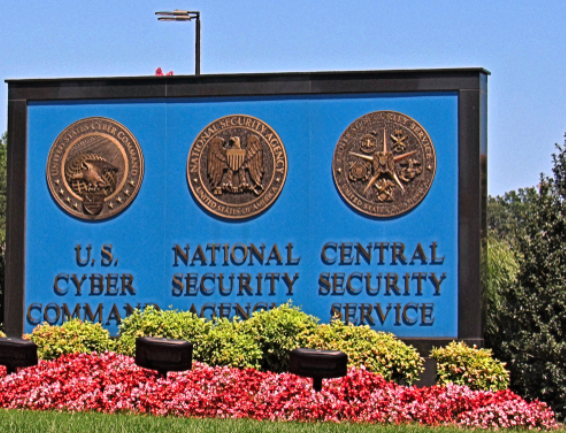
Four U.S. officials who spoke on condition of anonymity said the Trickbot disruption was the work of U.S. Cyber Command, a branch of the Department of Defense headed by the director of the NSA.
Known as the HTTP Cache or the Shared Cache, this Chrome component works by saving copies of resources loaded on a web page, such as images, CSS files, and JavaScript files.
Fintech startup Robinhood Markets Inc said on Friday some customers might have become a target of hackers because of their personal email accounts being compromised outside of its platform.
CVE-2020-14386 is a memory corruption vulnerability that can be used to escalate privileges from an unprivileged user into the root user on a Linux system.
The researchers focused on two of the most prolific creators of Windows exploits, who between them were responsible for at least 16 different Windows Kernel Local Privilege Escalation exploits.
Plans to add over a thousand new personnel were revealed by the force's chief technology and innovation officer, US Space Force Major General Kimberly Crider.
Software AG, one of the largest software companies in the world, has suffered a ransomware attack, and the company has not yet fully recovered from the incident.
Docsketch is notifying customers about a security breach that took place over the past summer. The company said that an unauthorized third-party gained access to a copy of its database.
UK school payment service Wisepay has revealed that the card details of parents who made transactions on its site between October 2 and 5 have been compromised.
A fresh Waterbear campaign is exploiting a vulnerability in a common and trusted data loss prevention (DLP) tool to steal credentials from a number of Taiwanese government entities.
According to researchers from Kaspersky, MontysThree APT, which is claimed to be a Russian-speaking group, has launched a series of highly targeted attacks against Cyrillic Windows versions.
Online Student's Management System suffers from multiple unauthenticated remote SQL injection vulnerabilities. No version is provided for this software but a fix was verified by the author on October 7, 2020.
The Bluetooth Qiui Cellmate attaches itself to a man's penis, allowing a remote partner to lock up your proverbials if they think you don't deserve to use them for a while. And with no umm.. manual over-ride, you could find your pickle in a right pickle if an unauthorised third-party exploits the flaws to lock show more ...
the cage without your permission. Built from a mixture of polycarbonate and toughened steel, removal is non-trivial and might involve taking an angle grinder or bolt cutters to a delicate part of your anatomy. That's not when you want to find out that there is a security flaw in the sex toy's API that means anyone can hijack your cock lock.