Making money with cryptocurrency is imagined by many to be a sinecure: one lucky trade and youre set for life. While theoretically possible, just like winning the lottery, it only happens to an incredibly small number of people. Getting rich with crypto is more of a meme than reality. Yet self-proclaimed show more ...
crypto-millionaires flaunt their Lamborghinis, stacks of cash, and watches the price of an apartment — fueling the dream. However, those cars are often rented, the money from a prank store, and the watches cheap knock-offs. These crypto gurus or insiders claim anyone can strike it rich with crypto; however, we all know theres no such thing as a free lunch. Today, we expose the fraudulent scheme of earning with Toncoin, which revolves around a cryptocurrency based on Telegram technologies. How the Toncoin earning scheme works Scammers promote a super-secret awesome bot and referral links as the key to earning Toncoin. In short: you invest your money, buy booster tariffs, invite friends, and earn commission from every coin invested. The pyramid scheme incentivizes larger investments with the promise of higher returns. According to our data, this scam has been active since at least November 2023 — targeting both Russian and users from other countries. To make it easier to lure in potential partners, the scammers have recorded instructional videos in both Russian and English, along with detailed manuals and a large number of explanatory screenshots. Lets break this scam down step by step. Get your protection ready, and lets dive in! Stage one: preparation First, the scammers instruct you to register a crypto wallet using an unofficial Telegram bot for storing crypto. Next, you provide your new wallet address to the bot for earnings through purchasing boosters. What these bots are really needed for, the scammers explain to victims later; initially, their main interest is ensuring you register without asking too many questions. Window of the bot for purchasing boosters; registration requires you to enter the address of the wallet previously created in the crypto wallet bot Next, youre instructed to buy 5.5 to 501 Toncoin (TON), with one TON equivalent to about six U.S. dollars at the time of writing this. They suggest using legitimate tools like P2P markets, crypto exchanges, or the official Telegram bot for this purchase. The freshly purchased TON must be immediately transferred to the crypto wallet bot — supposedly acting as your personal account within the earning system, which the scammers can control. Stage two: take action With accounts registered and coins purchased and transferred to the bot, its time to start earning. The scammers then ask you to activate the second bot — by choosing a booster tariff: bike, car, train, plane, or rocket. The fancier the tariff, the higher the commission percentage — bike costs 5 TON and offers 30% commission, while rocket is 500 TON for 70%. However, the choice is irrelevant, because whatever tariff the victim chooses, the money will be irretrievably lost. Window with tariff selection in the booster bot Following the scammers instructions, you create a private Telegram group and post several instructional videos about the earning scheme, along with your generated referral link. The abundance of these videos online indicates a significant number of victims have fallen for this scam. Stage three: earn! So, how do you actually earn something? With the help of your friends and acquaintances, of course! They will also need to buy TON, transfer it to the crypto wallet, and activate the booster bot. The scammers strongly advise inviting at least five friends to your private group. The number of invitations is unlimited, and the more people you attract, the better for you. Remember: you wont earn until at least five people activate the booster bot!. All very tempting. They even recommend calling each friend to personally explain this incredible earning scheme. The scammers promise earnings from two sources: A fixed payment of 25 TON for each invited friend. Commission based on the booster tariff purchased by your referrals. It turns out to be a classic pyramid scheme, where each participant is a partner rather than a freeloader. Sadly, nobody profits except the scammers, and all partners lose their investments. How to avoid crypto scams Dont fall for get-rich-quick schemes — even if promoted by friends or family. They might be victims themselves, unaware of the scam. Never transfer cryptocurrency to unknown or obscure wallets. This scam uses a confusing sequence of instructions, making it easy to overlook the suspicious transfer of money from the official @wallet bot to a third-party one. Use maximum protection for your crypto assets. This will securely store your wallet data, warn you about suspicious websites, block crypto-phishing links and scams, and protect you from miners and other threats. Read our posts about crypto scammers to stay informed about all the latest fraudulent schemes, and dont forget to share them with friends and family — especially those who still arent all that internet-savvy.
The head of counterintelligence for a division of the Russian Federal Security Service (FSB) was sentenced last week to nine years in a penal colony for accepting a USD $1.7 million bribe to ignore the activities of a prolific Russian cybercrime group that hacked thousands of e-commerce websites. The protection scheme show more ...
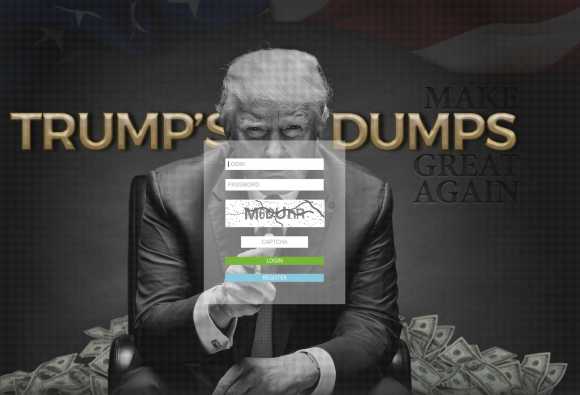
was exposed in 2022 when Russian authorities arrested six members of the group, which sold millions of stolen payment cards at flashy online shops like Trump’s Dumps. A now-defunct carding shop that sold stolen credit cards and invoked 45’s likeness and name. As reported by The Record, a Russian court last week sentenced former FSB officer Grigory Tsaregorodtsev for taking a $1.7 million bribe from a cybercriminal group that was seeking a “roof,” a well-placed, corrupt law enforcement official who could be counted on to both disregard their illegal hacking activities and run interference with authorities in the event of their arrest. Tsaregorodtsev was head of the counterintelligence department for a division of the FSB based in Perm, Russia. In February 2022, Russian authorities arrested six men in the Perm region accused of selling stolen payment card data. They also seized multiple carding shops run by the gang, including Ferum Shop, Sky-Fraud, and Trump’s Dumps, a popular fraud store that invoked the 45th president’s likeness and promised to “make credit card fraud great again.” All of the domains seized in that raid were registered by an IT consulting company in Perm called Get-net LLC, which was owned in part by Artem Zaitsev — one of the six men arrested. Zaitsev reportedly was a well-known programmer whose company supplied services and leasing to the local FSB field office. The message for Trump’s Dumps users left behind by Russian authorities that seized the domain in 2022. Russian news sites report that Internal Affairs officials with the FSB grew suspicious when Tsaregorodtsev became a little too interested in the case following the hacking group’s arrests. The former FSB agent had reportedly assured the hackers he could have their case transferred and that they would soon be free. But when that promised freedom didn’t materialize, four the of the defendants pulled the walls down on the scheme and brought down their own roof. The FSB arrested Tsaregorodtsev, and seized $154,000 in cash, 100 gold bars, real estate and expensive cars. At Tsaregorodtsev’s trial, his lawyers argued that their client wasn’t guilty of bribery per se, but that he did admit to fraud because he was ultimately unable to fully perform the services for which he’d been hired. The Russian news outlet Kommersant reports that all four of those who cooperated were released with probation or correctional labor. Zaitsev received a sentence of 3.5 years in prison, and defendant Alexander Kovalev got four years. In 2017, KrebsOnSecurity profiled Trump’s Dumps, and found the contact address listed on the site was tied to an email address used to register more than a dozen domains that were made to look like legitimate Javascript calls many e-commerce sites routinely make to process transactions — such as “js-link[dot]su,” “js-stat[dot]su,” and “js-mod[dot]su.” Searching on those malicious domains revealed a 2016 report from RiskIQ, which shows the domains featured prominently in a series of hacking campaigns against e-commerce websites. According to RiskIQ, the attacks targeted online stores running outdated and unpatched versions of shopping cart software from Magento, Powerfront and OpenCart. Those shopping cart flaws allowed the crooks to install “web skimmers,” malicious Javascript used to steal credit card details and other information from payment forms on the checkout pages of vulnerable e-commerce sites. The stolen customer payment card details were then sold on sites like Trump’s Dumps and Sky-Fraud.
Though organizations are increasingly incorporating zero-trust strategies, for many, these strategies fail to address the entirety of an operation, according to Gartner.
The irony is lost on few, as a Chinese threat actor used eight MITRE techniques to breach MITRE itself — including exploiting the Ivanti bugs that attackers have been swarming on for months.
The new facility, details about which have not previously been reported, marks the fruition of a significant doctrinal shift in how the alliance approaches operations in cyberspace.
An operator of the HelloKitty ransomware operation announced they changed the name to 'HelloGookie,' releasing passwords for previously leaked CD Projekt source code, Cisco network information, and decryption keys from old attacks.
A New York federal jury found a hacker guilty of all charges that he masterminded and carried out a scheme to fraudulently obtain $110 million from cryptocurrency exchange Mango Markets and investors.
The agency is attributing the surge to a group tracked as UAC-0184, which was spotted in February targeting an unnamed Ukrainian entity in Finland. CERT-UA does not attribute UAC-0184’s activity to any specific foreign cyber threat group.
The hire marks another coup for the British public sector in poaching talent from the technology industry, particularly at the executive level, following the recruitment of Ollie Whitehouse as the NCSC’s chief technology officer earlier this year.
Researchers from cybersecurity firm DomainTools told Recorded Future News that they have found nearly 30 newly created domains related to tolls, 15 of which have a “high chance of being weaponized for phishing, malware, or spam.”
Threat actors are continuing to successfully breach across the entire attack surface. Around 93% of enterprises who admitted a breach reported unplanned downtime, data exposure, or financial loss as a result, according to a survey by Pentera.
Japan’s CERT warned that the WordPress plugin Forminator, developed by WPMU DEV, is affected by multiple vulnerabilities, including a flaw that allows unrestricted file uploads to the server.
Security experts say Western teenagers comprise a number of active affiliate groups, many with ties to the cybercrime community that calls itself "The Community," aka the Com or Comm.
A malware campaign was found injecting malicious JavaScript code into compromised WordPress sites to redirect site visitors to VexTrio domains, specifically using dynamic DNS TXT records of the tracker-cloud[.]com domain to obtain redirect URLs.
Threat actors created a website to impersonate UsenetClub, a subscription service for "uncensored" access to images and videos downloaded from Usenet. They claimed to provide free access to the site after the installation of a "CryptVPN" software.
New research has found that the DOS-to-NT path conversion process could be exploited by threat actors to achieve rootkit-like capabilities to conceal and impersonate files, directories, and processes.
The exploit occurs when referencing a private/local package, which inadvertently fetches a malicious package similarly named from the public registry due to misconfigurations in package managers.
A malicious PyPI package named "discordpy_bypass-1.7" was detected on March 12, 2024. This package is designed to extract sensitive information from user systems using a blend of persistence techniques, browser data extraction, and token harvesting.
A recent malware campaign used weaponized ZIP files to distribute the WINELOADER malware. The attackers send phishing emails with ZIP attachments that, when extracted, execute a PowerShell script to download and install the malware.
Androxgh0st operators are exploiting multiple CVEs, including CVE-2021-3129 and CVE-2024-1709 to deploy a web shell on vulnerable servers, granting remote control capabilities. Evidence also suggests active web shells associated with CVE-2019-2725.
New research has found that the DOS-to-NT path conversion process could be exploited by threat actors to achieve rootkit-like capabilities to conceal and impersonate files, directories, and processes. "When a user executes a function that has a path argument in Windows, the DOS path at which the file or folder exists is converted to an NT path," SafeBreach security researcher Or Yair said&
Microsoft has revealed that North Korea-linked state-sponsored cyber actors has begun to use artificial intelligence (AI) to make its operations more effective and efficient. "They are learning to use tools powered by AI large language models (LLM) to make their operations more efficient and effective," the tech giant said in its latest report on East Asia hacking groups. The company
Over the past two years, a shocking 51% of organizations surveyed in a leading industry report have been compromised by a cyberattack. Yes, over half. And this, in a world where enterprises deploy an average of 53 different security solutions to safeguard their digital domain. Alarming? Absolutely. A recent survey of CISOs and CIOs, commissioned by Pentera and
The MITRE Corporation revealed that it was the target of a nation-state cyber attack that exploited two zero-day flaws in Ivanti Connect Secure appliances starting in January 2024. The intrusion led to the compromise of its Networked Experimentation, Research, and Virtualization Environment (NERVE), an unclassified research and prototyping network. The unknown adversary "performed reconnaissance
Between crossovers - Do threat actors play dirty or desperate? In our dataset of over 11,000 victim organizations that have experienced a Cyber Extortion / Ransomware attack, we noticed that some victims re-occur. Consequently, the question arises why we observe a re-victimization and whether or not this is an actual second attack, an affiliate crossover (meaning an affiliate has gone to
The threat actor known as ToddyCat has been observed using a wide range of tools to retain access to compromised environments and steal valuable data. Russian cybersecurity firm Kaspersky characterized the adversary as relying on various programs to harvest data on an "industrial scale" from primarily governmental organizations, some of them defense related, located in